Walk into any prestigious land-based casino, and you’ll notice something striking: the atmosphere carries an almost ceremonial weight. From the moment patrons pass through the doors, they enter a world governed by unwritten rules, formal protocols, and traditions that have remained largely unchanged for decades. Remarkably, these casino rituals mirror the reverence and formality we associate with national anthems and state ceremonies.
Both institutions create transformative experiences through carefully choreographed traditions. Just as a national anthem commands attention and respect, casino ceremonies elevate gambling from mere entertainment into something more significant. This exploration reveals how land-based casinos have mastered the art of ceremonial tradition, creating an environment where formality and ritual shape every interaction.
The Power of Ritual in Creating Sacred Spaces
Establishing Boundaries Between Ordinary and Extraordinary
National anthems serve as auditory thresholds, marking the transition from casual time into moments of importance. When the first notes play, conversations cease and attention focuses. Land-based casinos employ similar threshold rituals that signal entry into an extraordinary space.
The journey through casino doors often involves passing security checkpoints and crossing into spaces where time seems suspended—clocks disappear, and natural light fades. These physical transitions mirror the moment when everyone rises for an anthem. The message is clear: you are leaving the ordinary world behind.
Many high-end casinos require identification checks and membership verifications. These gatekeeping rituals aren’t merely practical—they reinforce the notion that entry is a privilege, not a right.
Building Collective Identity Through Shared Experience
National anthems unite diverse populations under a common symbol. Regardless of background, citizens share this moment of collective identity. Casino traditions create similar bonds among players who might otherwise never interact.
At a craps table, players cheer together when the shooter succeeds. At poker tournaments, participants observe identical protocols and hand signals. These shared practices create temporary communities bound by common understanding.
The repetition of these rituals—night after night, hand after hand—builds a culture as distinctive as any national tradition. Regular patrons become custodians of these practices, teaching newcomers the unwritten rules.
Dress Codes and Visual Formality
The Significance of Formal Attire
Historic casinos like Monte Carlo and Baden-Baden enforced strict dress codes that rivaled royal courts. Gentlemen wore tuxedos; ladies donned evening gowns. While modern casinos have relaxed some requirements, many still maintain standards that elevate the experience above everyday attire.
These dress codes serve the same function as formal wear at state dinners or military ceremonies. Appearance becomes part of the ritual, signaling respect for the institution and occasion. When patrons dress formally, they mentally prepare for the experience ahead.
Some exclusive gaming rooms still require jackets and ties. This isn’t merely about aesthetics—it’s about maintaining ceremonial dignity.
Symbolic Colors and Designs
Casino interiors employ deliberate color schemes that evoke luxury and tradition:
- Deep reds and golds suggesting royalty and wealth
- Green felt tables recalling centuries-old gaming traditions
- Rich wood paneling creating an atmosphere of established authority
- Crystal chandeliers casting light reminiscent of palace ballrooms
Similarly, national anthems pair with flags whose colors carry deep symbolic meaning. Both environments use visual language to communicate values and create emotional responses. The careful curation of these spaces ensures nothing appears accidental or casual.
The Ceremony of the Dealer and Game Rituals
Choreographed Movements and Protocols
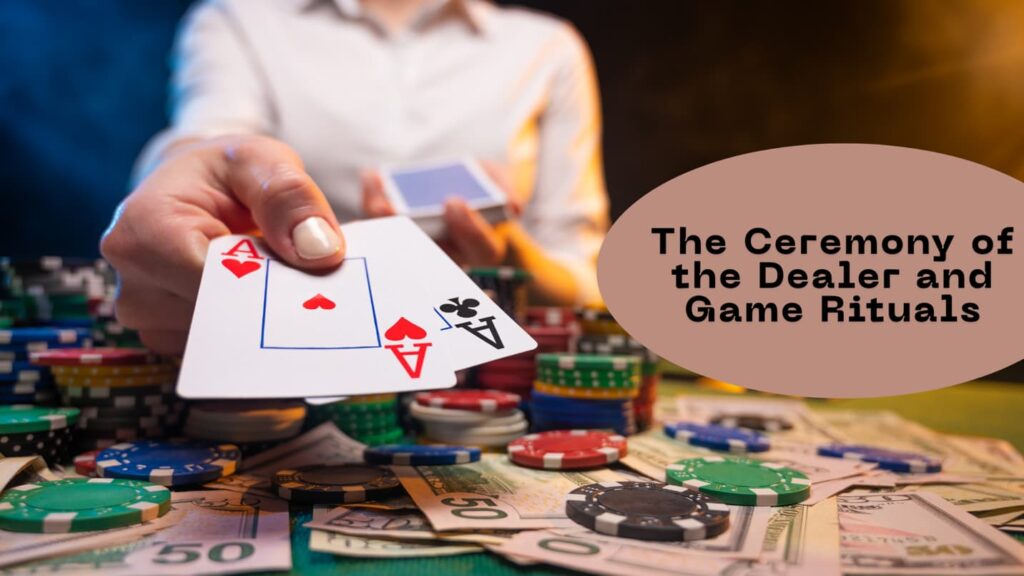
Watch a professional dealer at work, and you’ll witness something resembling a military drill. Every movement follows precise protocols learned through extensive training. Cards are shuffled using specific techniques, spread for inspection, and dealt with mathematical precision.
Chips must be stacked in uniform columns. Hands must be clapped and shown empty before leaving the table. These aren’t arbitrary rules—they’re ceremonial protocols ensuring integrity and maintaining tradition.
The similarity to military ceremonies is striking. Both require endless practice to achieve effortless precision. Both demand that individual performers subordinate personal style to institutional standards.
The Opening and Closing of Tables
Few casino guests witness the formal ceremonies of opening and closing gaming tables, but these rituals are remarkably elaborate. Supervisors must verify equipment, count chip inventories, and sign official documents. Each step requires witnesses and follows documented procedures.
When a table closes for the night, dealers perform a choreographed routine: clearing the layout, securing chips, and formally transferring responsibility to management. These procedures mirror the lowering of flags at military installations—a formal acknowledgment that the day’s official business has concluded.
Nothing happens without proper authority. Pit bosses oversee operations like ceremony masters, ensuring protocols are faithfully executed.
Sound, Silence, and Acoustic Ceremony
Strategic Use of Sound
Casinos are masterfully orchestrated soundscapes. Slot machines create constant acoustic feedback—chimes, bells, and celebratory music. These sounds serve a ceremonial function, publicly announcing victories and maintaining energy.
At table games, sound becomes more selective. The crisp snap of cards, the rattle of dice, the click of chips—these sounds carry significance. They’re the percussion instruments in the casino’s symphony.
Moments of silence carry equal weight. When a roulette wheel spins, conversations often pause as players watch intently. This collective quiet mirrors the hush before a national anthem begins.
Announcements and Formal Declarations
Dealers make pronouncements with ceremonial authority. “No more bets” carries the finality of a judge’s gavel. “Place your bets” opens the ritual anew. These verbal markers structure the gaming experience into formal segments.
Key phrases dealers must use include:
- “Changing one hundred” (announced when breaking large bills)
- “Checks play” (alerting supervisors to high-value chips in action)
- “Marker for table [number]” (formally requesting credit authorization)
Each announcement follows prescribed language, ensuring consistency across shifts and properties. The formality in these declarations grants them authority, much like official proclamations at state functions.
Respect for Tradition and Institutional Authority
Both casinos and national ceremonies preserve practices that span generations. They resist casual modernization because tradition itself holds value. The baccarat rituals performed today mirror those from centuries past, just as national anthems remain unchanged despite evolving musical tastes.
Unwritten rules govern behavior in both settings. You don’t speak during anthems; you don’t touch cards in certain games. You stand at prescribed moments; you remain seated during active play. Breaking these protocols invites social censure or official intervention.
Authority figures—pit bosses, floor supervisors, security personnel—maintain order with quiet vigilance. Like ceremony masters at state functions, they ensure traditions are honored. Their presence reminds participants that these spaces operate under special rules.
Conclusion
The parallel between casino ceremonial traditions and national anthems reveals something profound about human nature. We crave rituals that elevate ordinary experiences into meaningful moments. Land-based casinos have perfected this transformation, creating environments where formality and tradition govern every interaction.
From dress codes to dealer choreography, from acoustic landscapes to formal pronouncements, casinos employ ceremonial elements that mirror our most revered national traditions. These aren’t accidents of design—they’re deliberate choices that tap into our deep respect for ritual and protocol.
In an increasingly casual world, both casino traditions and national anthems endure because they offer something rare: moments of shared formality that connect us to history and community. They remind us that some experiences deserve ceremony, and that the elevation of ordinary moments into something memorable requires intention, respect, and tradition.